Keep these in mind.
- Measure packaged items and note any orientation limits.
- Gather weights separately from cargo dimensions.
- Check door openings and loading arrangements for the actual unit.

Make an inventory you can explain.
“A few pallets” or “some equipment” can mean very different things. Start by listing the items, quantities and packaging you expect to carry. Include containers, tools and any equipment travelling with the goods. If the load changes between stops, note the largest combined load you expect at one time.
Separate the ordinary cartons from the items that need special attention: long pieces, bulky packages, fragile goods or objects that cannot be stacked. That gives the rental team a clearer picture and helps you identify questions for the supplier or receiving location before selecting a vehicle.
Record the dimensions that matter.
Measure length, width and height with the packaging included. Label the measurements clearly and use the same units throughout your list. For a repeated type of carton, record both the dimensions and quantity; for an unusual item, take a separate measurement rather than estimating from a photograph.
Compare the load with the actual vehicle’s usable cargo area and door openings. Floor space alone does not tell you whether an item can enter the vehicle or fit in its intended position. Explain any orientation limits, such as an item that must remain upright, when discussing the vehicle with the office.
Gather weights and loading information.
Use weights supplied by the manufacturer, shipper or other reliable records where available, and identify anything still unknown. Include packaging and equipment in the load information. Ask the rental team to confirm the applicable limits for the actual vehicle; cargo volume and carrying capacity are different parts of the comparison.
Describe how the load will be moved at pickup and delivery. Will the site supply equipment and staff? Are the goods on pallets, in cartons or loose? Check those arrangements with the site contact. Tell the office which vehicle features or equipment you need rather than assuming every vehicle in a class has them.
Use the brief to make the decision.
Bring together the inventory, dimensions, known weights and loading arrangements in one note. Add destination details, access information and the number of trips you expect. If a supplier changes the packaging or quantity, update the brief before confirming the vehicle.
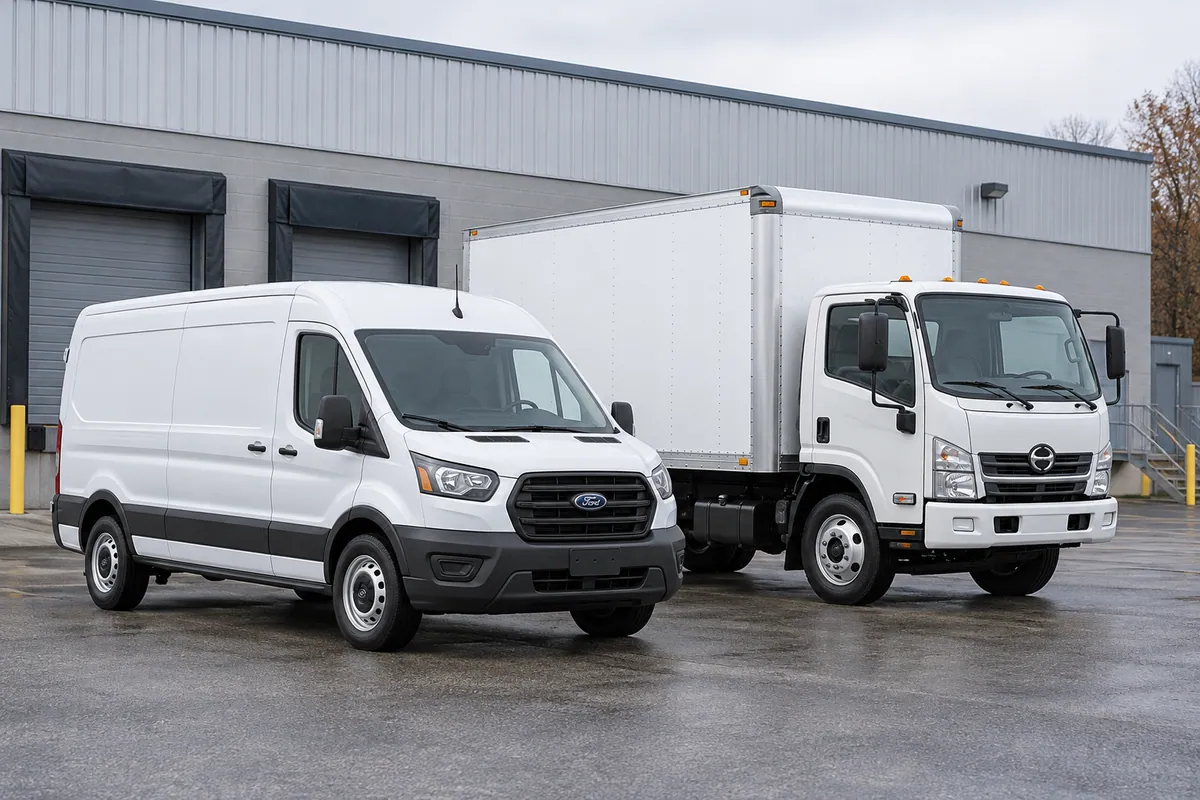
Use the planned FMR lineup to compare box-truck and cargo-van formats, then ask about the specifications of the available unit. Do not choose from the vehicle image alone. A clear load brief helps you have a useful conversation about fit, while the confirmed vehicle details provide the information needed for the final choice.